
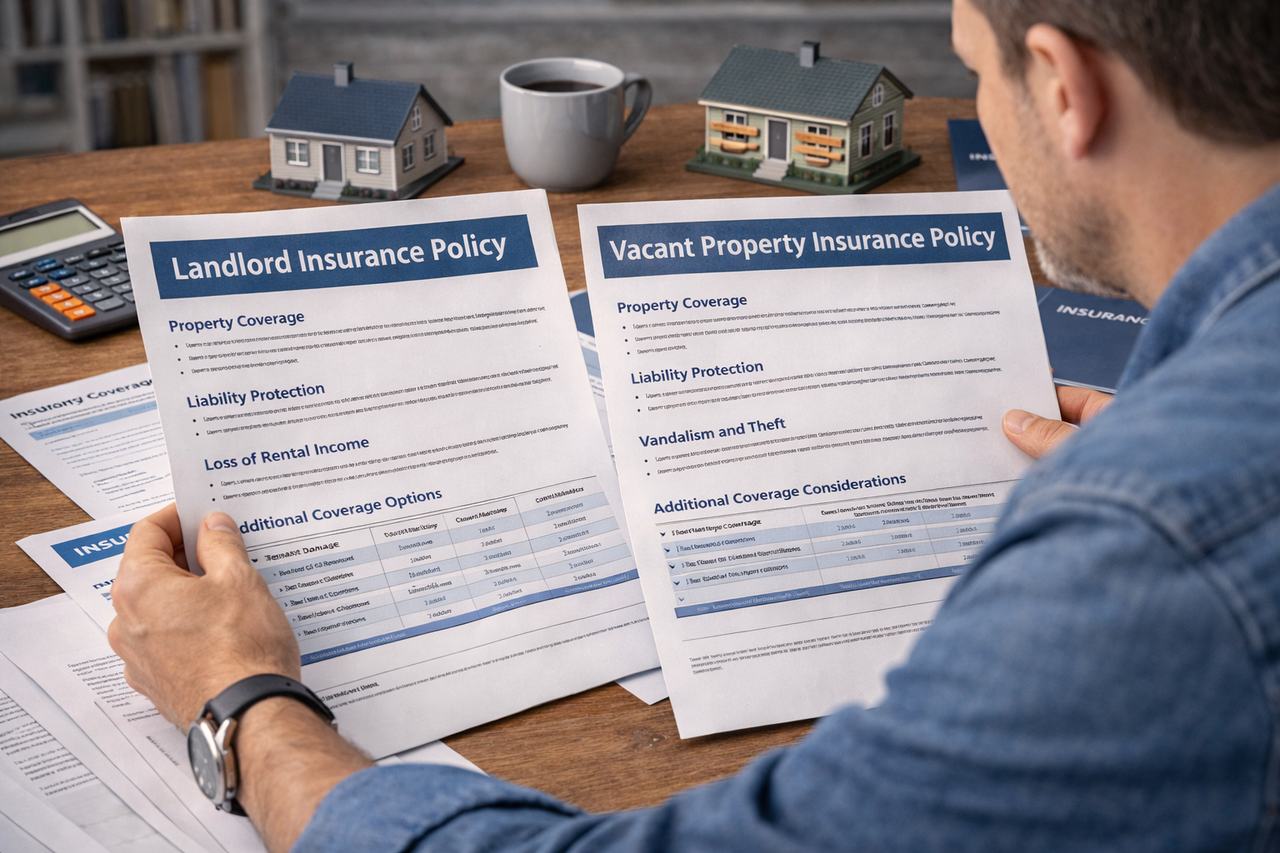
Landlord Insurance vs Vacant Property Insurance
Rental property investors sometimes face periods when a property is temporarily vacant. This may occur during renovations, between tenants, or while preparing a property for sale or lease. During these times, insurance coverage may need to change.
Understanding the difference between landlord insurance and vacant property insurance helps investors ensure that their properties remain properly protected even when they are unoccupied.
If you are exploring investor insurance options, start with our real estate investor insurance hub.
Insurance protects physical assets, but investors also manage risk through financing structure and property performance. Many investors finance rental properties using DSCR loans for rental properties, which evaluate whether rental income can support mortgage payments.
What Is Landlord Insurance?
Landlord insurance is designed for rental properties that are occupied by tenants and generating rental income. These policies assume the property is actively being leased and maintained as a rental investment.
Typical landlord insurance coverage includes:
- Property damage coverage for the building
- Liability protection related to tenant occupancy
- Loss of rental income after covered events
You can learn more in our landlord insurance guide.
What Is Vacant Property Insurance?
Vacant property insurance is designed for properties that remain unoccupied for extended periods. When a property is vacant, the risk profile changes significantly.
Vacant homes are more vulnerable to issues such as vandalism, theft, and undetected damage. Because of this increased risk, standard landlord policies may limit or suspend coverage after a certain vacancy period.
Vacant property insurance provides protection for buildings that are temporarily unoccupied.
Why Vacancy Changes Insurance Risk
Insurance companies treat vacant properties differently because many risks increase when no one is living in the building.
Common risks associated with vacant properties include:
- Vandalism or theft
- Undetected water leaks
- Weather related damage
- Unauthorized occupancy
When a property is occupied, tenants or owners typically notice problems quickly. Vacant buildings may experience damage that goes unnoticed for longer periods.
Key Differences Between Landlord Insurance and Vacant Property Insurance
| Feature | Landlord Insurance | Vacant Property Insurance |
|---|---|---|
| Occupancy Status | Tenant occupied | Unoccupied property |
| Rental Income Protection | Often included | Typically not applicable |
| Vandalism Protection | Standard coverage | Enhanced coverage options |
| Risk Profile | Moderate risk | Higher risk |
| Policy Cost | Typically lower | Often higher due to increased risk |
When Investors May Need Vacant Property Insurance
Rental property investors may require vacant property insurance in several situations.
- Major property renovations
- Extended vacancy between tenants
- Property awaiting sale
- Seasonal or temporary vacancy
Many landlord insurance policies define vacancy periods, often around 30 to 60 days. After that period, coverage may be limited unless a vacant property endorsement or separate policy is obtained.
Insurance and Rental Property Financing
Mortgage lenders typically require rental properties to maintain active insurance coverage while the loan remains in place. If a property becomes vacant for an extended period, investors may need to notify their insurance provider to maintain proper protection.
Many rental investors use financing programs designed for income producing properties.
Learn more about these financing options through DSCR loans for real estate investors.
Vacancy Risk and Rental Property Performance
Vacancy risk is also an important factor in rental property investment performance. Periods without tenants can reduce rental income and affect property cash flow.
Investors often evaluate vacancy risk alongside operating expenses and rental income stability.
For a deeper analysis, see rental property risk analysis.
Periods of vacancy are common in rental property investing, especially during renovations or tenant turnover. Understanding how vacancy affects both insurance coverage and rental income helps investors maintain financial stability during these transitions.
Key Takeaways
- Landlord insurance protects tenant occupied rental properties
- Vacant property insurance protects properties that are temporarily unoccupied
- Vacant properties typically carry higher insurance risk
- Insurance policies may limit coverage after a property remains vacant for extended periods
- Investors should review insurance coverage whenever occupancy status changes
Frequently asked questions
What should I know about Landlord Insurance vs Vacant Property Insurance?
Landlord Insurance vs Vacant Property Insurance should be reviewed in the context of your actual risk, not only the lowest premium. Policy language, endorsements and carrier appetite can change the practical answer.
How can I avoid coverage gaps?
Share accurate property, vehicle, business or rental details with your agent, review exclusions and ask how deductibles and limits would apply in a realistic claim.
When should I request a review?
Request a review before renewals, after major purchases, after property changes, when adding rentals or vehicles, or any time your financial exposure changes.

Missouri and Kansas Insurance Agent
Work With Tracy Fitch
Missouri and Kansas clients can work with Tracy Fitch, a property and casualty licensed insurance agent with more than a decade of insurance experience. Tracy helps clients review coverage, compare options, request policy changes, and understand next steps for home, auto, landlord, umbrella, renters, boat, RV, and business insurance.
Office: 212 W Mill St, Liberty, MO 64068
Email tfitch@hensonagency.com or call 816-479-4189.
Compare ownership structure before requesting a quote
Vacant-property insurance should be reviewed alongside the deed, named insured, occupancy, financing, and the owner’s broader portfolio. Use our personal vs. LLC rental-property insurance guide to compare the structures, then request a review.