How to Lower RV Insurance Cost
Direct answer
How can you lower RV insurance costs?
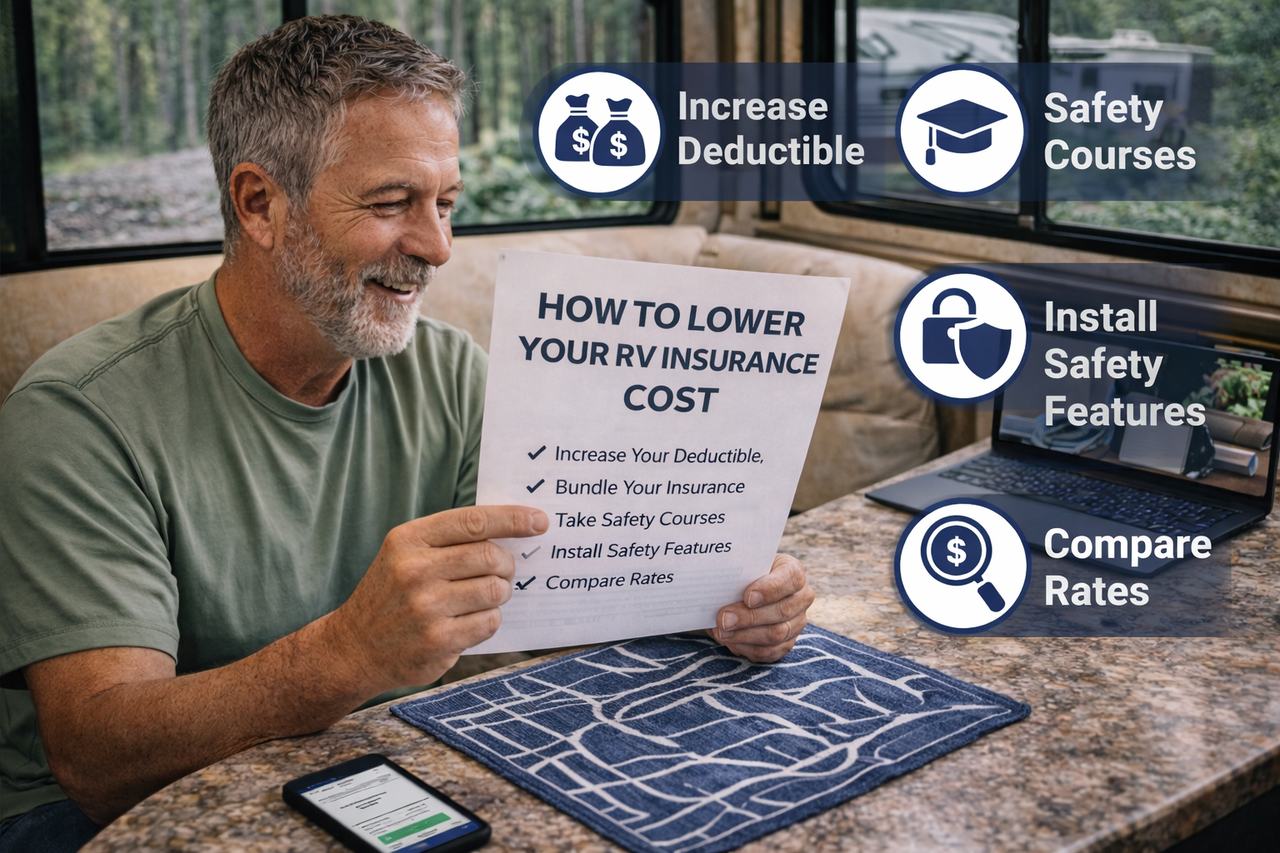
You may be able to lower RV insurance costs by comparing carriers, using eligible bundle or safety discounts, choosing a deductible you can afford, reporting seasonal use and secure storage accurately, and removing coverage that no longer fits the RV. Review the resulting limits and exclusions so a lower premium does not create an unintended gap.
RV insurance premiums can vary widely depending on the type of recreational vehicle, its value, how often it is used, and the coverage options selected. Fortunately, there are several ways RV owners can reduce insurance costs while still maintaining strong protection.
Lowering RV insurance premiums usually involves a combination of coverage choices, deductible decisions, and eligibility for available discounts. Understanding how insurers calculate premiums can help owners structure their policies more efficiently.
If you are evaluating insurance options, it may also help to review how much RV insurance costs and available RV insurance discounts.
Increase your deductible
One of the most direct ways to lower an RV insurance premium is by increasing the deductible. The deductible is the amount the policyholder pays out of pocket before insurance coverage applies to a claim.
Choosing a higher deductible reduces the insurer’s potential payout on smaller claims, which often results in lower premiums.
- Higher deductibles usually reduce premiums
- Lower deductibles increase monthly or annual cost
- Deductibles should align with financial comfort level
To better understand how deductibles affect insurance pricing, review RV insurance deductibles explained.
Bundle policies with the same insurance provider
Many insurers offer multi policy discounts when RV insurance is bundled with other types of coverage such as homeowners insurance, auto insurance, or umbrella policies.
Bundling policies can sometimes reduce overall insurance costs across multiple policies.
- RV insurance combined with auto insurance
- RV insurance combined with homeowners insurance
- Multiple recreational vehicles insured together
For more details about available savings opportunities, see RV insurance discounts.
Choose the right coverage limits
Insurance policies often include several optional coverage components. Selecting coverage levels that match the actual value of the RV and personal risk tolerance can help control premium cost.
Common coverage components that affect price include:
- RV collision coverage
- RV comprehensive coverage
- Total loss replacement coverage
- Personal effects coverage
Reviewing these coverages carefully can help RV owners avoid paying for protection they may not need while still maintaining appropriate risk protection.
Use your RV seasonally
Many RV owners only use their vehicles during certain parts of the year. Some insurers offer lower premiums for recreational vehicles that are used occasionally or stored during the off season.
- Seasonal travel usage
- Limited annual mileage
- Secure storage during winter months
If your RV is primarily used for vacations or occasional travel, you may want to review RV insurance for seasonal use.
Improve RV security and storage
Insurance companies may offer lower premiums when the risk of theft or damage is reduced. RVs that are stored securely or equipped with safety features may qualify for lower insurance costs.
- Secure indoor storage facilities
- Anti theft devices
- GPS tracking systems
- Alarm systems or immobilizers
These risk reduction measures may make the RV less attractive to thieves and reduce potential claim exposure.
Maintain a clean driving record
Driver history plays a major role in insurance pricing. Drivers with fewer accidents and violations are generally considered lower risk by insurers.
- Avoid traffic violations
- Maintain safe driving habits
- Limit claims when possible
Safe driving history may also help qualify RV owners for additional premium discounts depending on the insurer.
Compare quotes from multiple insurers
Because insurance companies use different underwriting models and pricing strategies, premiums can vary significantly between carriers. Comparing quotes from several insurers can often reveal meaningful differences in pricing.
Working with an agency that can review policies across multiple carriers may help identify better coverage options and competitive premiums.
Location can influence RV insurance cost
Insurance premiums can also vary depending on where the RV is registered or stored. Regional factors such as weather exposure, theft rates, and claims frequency may affect pricing.
For location specific guidance, review:
Lowering RV insurance cost within the RV coverage structure
Lowering insurance premiums should always be balanced with maintaining appropriate coverage. Selecting the right coverage structure helps protect both the RV itself and the financial well being of the owner in the event of a claim.
Related RV insurance pages
Compare RV insurance options
Reducing RV insurance costs does not have to mean sacrificing important protection. Reviewing policy structure, exploring available discounts, and comparing quotes across multiple insurers can help RV owners identify policies that balance affordability and coverage.
Our agency helps RV owners evaluate insurance options and identify policies that align with their travel patterns, RV type, and financial goals.
Request your RV insurance quote
Coverage availability, limits, exclusions, deductibles, and eligibility vary by carrier and policy. This page provides general informational guidance and does not describe all terms or conditions of any specific insurance policy.
Frequently asked questions
Will raising my RV insurance deductible lower the premium?
It often can, but savings vary. Compare the premium reduction with the extra amount you would pay after a collision or comprehensive claim.
Can seasonal use or storage reduce RV insurance cost?
Some carriers account for limited use, mileage, storage location, or lay-up periods. Options and restrictions vary, so report actual use and ask what protection remains while the RV is stored.
What is the safest way to compare lower-cost RV policies?
Use the same RV details, drivers, limits, deductibles, valuation method, and optional coverages for each quote. That makes price differences more meaningful and exposes coverage tradeoffs.

Missouri and Kansas Insurance Agent
Work With Tracy Fitch
Missouri and Kansas clients can work with Tracy Fitch, a property and casualty licensed insurance agent with more than a decade of insurance experience. Tracy helps clients review coverage, compare options, request policy changes, and understand next steps for home, auto, landlord, umbrella, renters, boat, RV, and business insurance.
Office: 212 W Mill St, Liberty, MO 64068
Email tfitch@hensonagency.com or call 816-479-4189.