How Landlord Insurance Is Priced
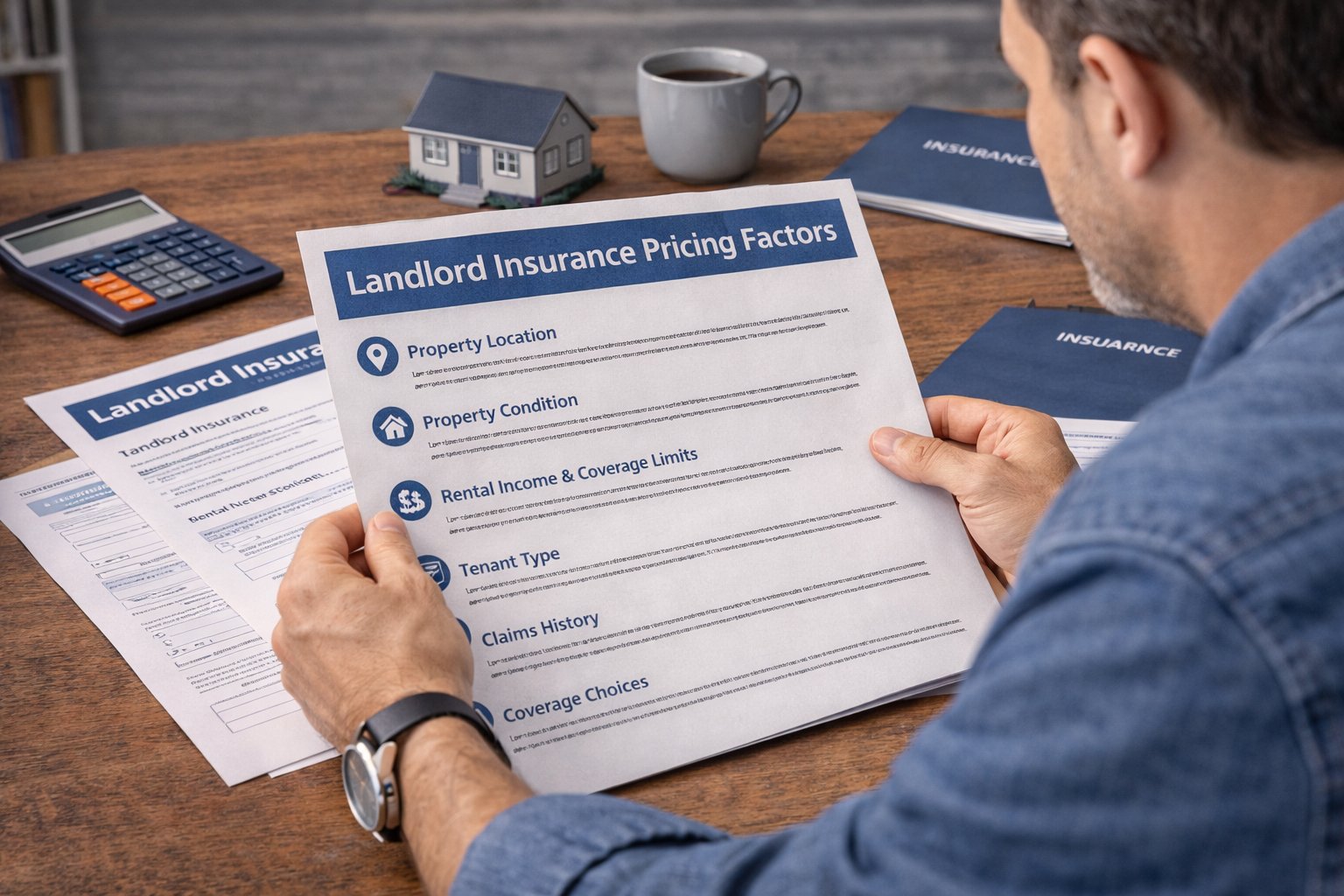
Landlord insurance pricing is based on risk. Insurance companies evaluate the property itself, the type of rental activity, the amount of coverage requested, and the likelihood of future claims. The premium you pay reflects how risky the insurer believes the rental property is to insure.
For real estate investors, understanding how landlord insurance is priced helps with budgeting, comparing quotes, and improving the long term profitability of a rental property.
If you are new to investor insurance, start with our landlord insurance guide.
Insurance pricing affects more than just your premium. It also affects your rental property cash flow and overall deal quality. Many investors evaluate insurance costs alongside financing metrics such as DSCR loan qualification and operating expense projections before buying a rental property.
Property Location
One of the biggest pricing factors is location. Insurance companies evaluate where the rental property is located and what risks are associated with that area.
Location related factors may include:
- Crime rates
- Storm exposure
- Flood exposure
- Wildfire exposure
- Local rebuilding costs
Properties in higher risk areas generally have higher insurance premiums because the chance of future losses is greater.
Replacement Cost of the Property
Landlord insurance is often priced based on the estimated cost to rebuild the structure if it were destroyed. This is known as replacement cost.
Replacement cost pricing considers:
- Square footage
- Construction materials
- Building style
- Labor and material costs in the area
More expensive buildings cost more to insure because the insurer may have to pay more to rebuild them after a major loss.
Age and Condition of the Building
Older properties often cost more to insure because they may be more likely to experience plumbing issues, electrical problems, roof failures, or other losses.
Insurance companies may evaluate:
- Roof age
- Electrical system updates
- Plumbing condition
- HVAC age
- General building maintenance
Well maintained properties with updated systems may receive more favorable pricing than properties with deferred maintenance.
Older rental properties may look attractive because of lower purchase prices, but insurance costs can quietly reduce cash flow if the building condition is poor. Always underwrite insurance realistically when comparing older properties.
Coverage Limits Selected
The more coverage you purchase, the higher the premium will usually be. Insurance pricing is heavily influenced by the amount of protection requested.
Coverage limits that affect pricing may include:
- Dwelling coverage amount
- Liability coverage amount
- Loss of rental income coverage
- Additional structures coverage
Higher limits create stronger protection, but they also increase premium cost.
Deductible Chosen
The deductible is the amount the property owner must pay before insurance coverage applies to a claim.
In general:
- Higher deductibles usually lower the premium
- Lower deductibles usually raise the premium
Investors often choose deductible levels based on reserve strength and risk tolerance.
Type of Rental Property
Insurance pricing can also vary depending on the type of property being insured.
Examples include:
- Single family rentals
- Duplexes and triplexes
- Small multifamily properties
- Condo rentals
- Short term rental properties
Each property type presents different liability risks and maintenance exposures, which can affect pricing.
Short term rentals often have different pricing because of higher guest turnover and different liability patterns. Learn more in short term rental insurance guide.
Claims History
Insurance companies review prior claims history when pricing landlord insurance. A property or owner with a history of claims may be viewed as a higher risk.
Frequent claims can lead to:
- Higher premiums
- Coverage restrictions
- Limited insurer options
Strong maintenance and risk management practices can help reduce future claim frequency.
Vacancy and Occupancy Risk
Properties that remain vacant for extended periods may be more expensive to insure. Vacancy increases risks such as vandalism, theft, and undetected water damage.
Likewise, properties with unusual occupancy patterns may carry different underwriting considerations.
If a property will remain unoccupied for long periods, investors may need to review landlord insurance vs vacant property insurance.
Liability Exposure
Properties with greater liability exposure may cost more to insure. Liability risk can be influenced by:
- Number of tenants
- Property condition
- Common areas
- Stairs, pools, or other hazards
- Prior injury claims
Investors with larger portfolios often add umbrella insurance to extend liability protection.
Environmental Risk Factors
Some properties require additional specialized coverage based on environmental risk. This may include:
- Flood insurance
- Wind and hurricane coverage
- Earthquake coverage
If a property needs these protections, total insurance cost can increase significantly.
For example, investors in higher flood risk areas may need flood insurance for rental properties.
Low insurance cost is not always the goal. The better goal is appropriate protection at a reasonable cost. Underinsuring a rental property may save premium upfront but create major financial exposure later.
How Insurance Pricing Affects Cash Flow
Insurance is an operating expense, which means it directly affects rental property profitability. If insurance premiums are higher than expected, actual cash flow can be much lower than an investor originally projected.
That is why insurance should always be included in full deal analysis.
For broader operating analysis, see rental property expenses list and rental property risk analysis.
How Investors Can Get Better Pricing
While not every factor is controllable, some investors can improve pricing by reducing risk in ways insurers value.
- Updating roofs, plumbing, or electrical systems
- Choosing higher deductibles when appropriate
- Maintaining strong property condition
- Avoiding small frequent claims
- Reviewing policy limits carefully
If you want more strategies, see how to lower landlord insurance cost.
Insurance pricing should be evaluated the same way investors evaluate taxes, maintenance, and financing. A property with great rent can still underperform if insurance costs are too high relative to income.
Key Takeaways
- Landlord insurance pricing is based on risk
- Property location, replacement cost, condition, and coverage limits all affect premium cost
- Claims history, vacancy, and liability exposure can increase pricing
- Insurance should be evaluated as part of overall rental property cash flow analysis
- The best insurance strategy balances adequate protection with long term cost control