RV Insurance Claim Process
Direct answer
What should I know about rv insurance claim process?
RV Insurance Claim Process is about understanding where coverage, exclusions, deductibles, limits and carrier rules can affect a household, property owner or business. The right answer usually depends on the property, assets, use case, claims history, risk tolerance and how the policy is written.
Filing an RV insurance claim can feel stressful, especially if the damage occurred during travel or severe weather. Understanding how the claim process works can help RV owners navigate the situation more confidently and reduce delays.
While the exact steps may vary between insurance companies, most RV insurance claims follow a similar structure. The process typically involves documenting the damage, reporting the claim to the insurer, and working with an adjuster to evaluate the loss.
Knowing what to expect during each stage can help ensure the claim is handled efficiently and that repairs or replacement can begin as soon as possible.
Review Your RV Insurance Coverage
Step 1: Ensure safety and prevent further damage
After an accident or loss event, the first priority is safety. If the RV has been involved in a collision or severe storm event, move to a safe location if possible and check for injuries.
If the RV is damaged but safe to access, take reasonable steps to prevent additional damage. For example:
- Cover exposed areas to prevent water intrusion
- Turn off utilities if plumbing systems are damaged
- Secure the RV if theft risk is present
These steps can help reduce additional losses before the claim is evaluated.
Step 2: Document the damage
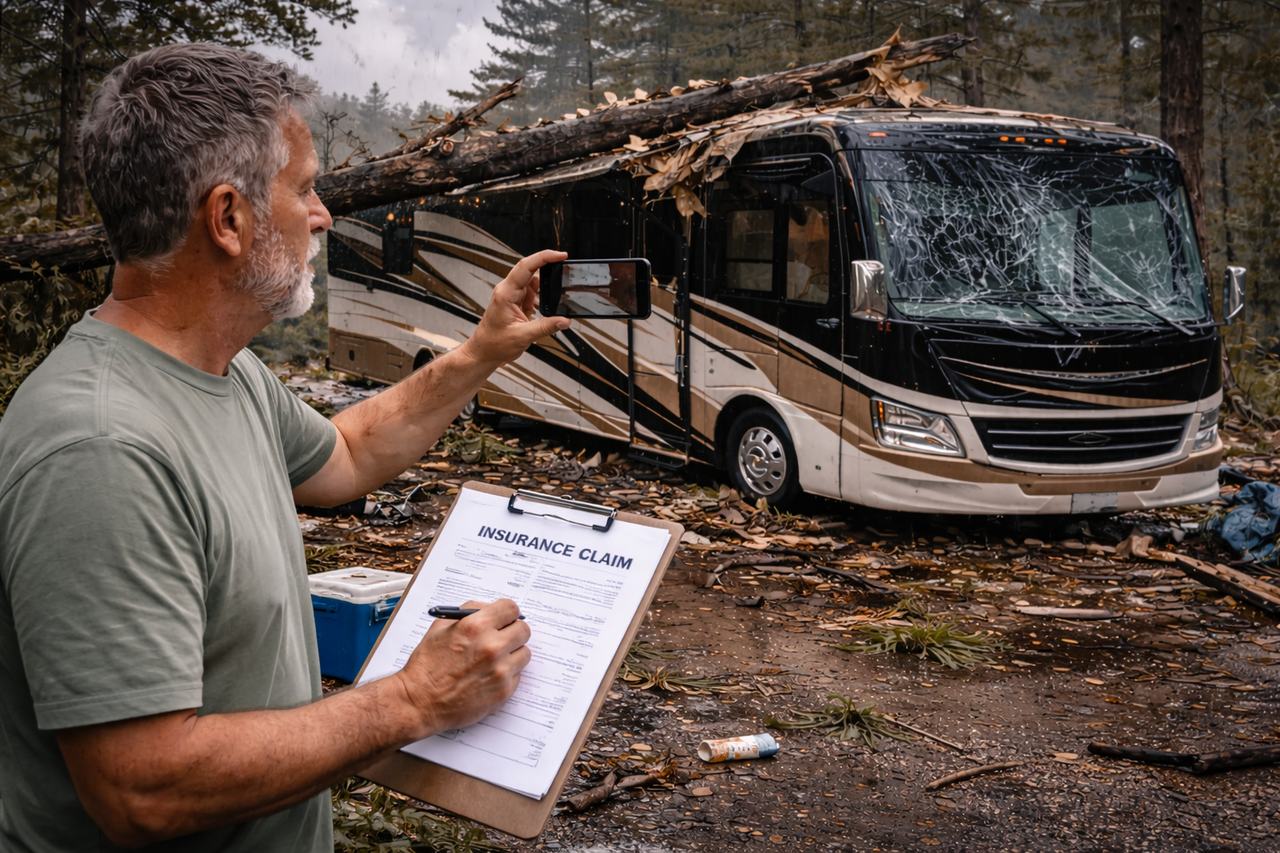
Thorough documentation is one of the most important parts of the claims process. Photos and written notes help insurers evaluate what occurred and determine the scope of the loss.
Important documentation may include:
- Photographs of all visible damage
- Images of the surrounding environment
- Photos of interior damage
- Any damaged personal belongings
Detailed documentation can help prevent delays when the claim is reviewed.
Step 3: Report the claim to your insurance company
Once the situation is stable and documented, the next step is to notify the insurance company. Most insurers allow claims to be reported online, through mobile apps, or by phone.
When reporting the claim, you may be asked to provide:
- Policy number
- Date and location of the incident
- Description of what occurred
- Photos or documentation of the damage
Providing clear and accurate information can help the claim move forward quickly.
Step 4: Claims adjuster evaluation
After the claim is filed, the insurance company typically assigns an adjuster to evaluate the damage. The adjuster reviews the documentation, assesses the damage, and determines whether the loss falls within the policy coverage.
The adjuster may:
- Inspect the RV in person
- Review repair estimates
- Request additional documentation
- Evaluate the cause of the damage
This stage determines how the claim will be handled and what coverage may apply.
Step 5: Repair estimates and settlement
Once the adjuster completes the evaluation, the insurance company may provide an estimate for repairs or determine a settlement amount.
The settlement may depend on several factors including:
- The type of coverage included in the policy
- The deductible selected
- The value of the RV
- Whether replacement cost coverage applies
For example, policies that include RV total loss replacement coverage may handle severe damage differently than policies based on actual cash value.
Step 6: Repair or replacement of the RV
Once the claim is approved, repairs can begin. Some insurers allow policyholders to select their own repair facility, while others may recommend repair centers experienced with RV construction.
Repairs may involve specialized RV service centers because recreational vehicles often require different repair techniques than passenger vehicles.
Claims related to common RV insurance risks
Many RV insurance claims involve damage caused by weather, accidents, or theft. These risks are typically evaluated under the coverage components included in the policy.
- RV collision coverage
- RV comprehensive coverage
- Storm damage coverage questions
- Water damage coverage questions
Understanding these coverage areas can help RV owners anticipate how certain claims may be handled.
RV insurance claim process within the coverage structure
The claims process ultimately depends on the coverage structure chosen when the policy was purchased. Deductibles, liability limits, and optional coverage endorsements all influence how claims are resolved.
Related RV insurance pages
Review your RV insurance coverage
Understanding how the claims process works can help RV owners prepare for unexpected situations and avoid delays if a loss occurs. Reviewing your coverage periodically ensures that your policy reflects your current RV type, travel habits, and risk exposure.
Our agency can help you review RV insurance policies and compare coverage options designed to protect your RV and travel lifestyle.
Request your RV insurance quote
Coverage availability, limits, exclusions, deductibles, and eligibility vary by carrier and policy. This page provides general informational guidance and does not describe all terms or conditions of any specific insurance policy.
Frequently asked questions
What should I know about RV Insurance Claim Process?
RV Insurance Claim Process should be reviewed in the context of your actual risk, not only the lowest premium. Policy language, endorsements and carrier appetite can change the practical answer.
How can I avoid coverage gaps?
Share accurate property, vehicle, business or rental details with your agent, review exclusions and ask how deductibles and limits would apply in a realistic claim.
When should I request a review?
Request a review before renewals, after major purchases, after property changes, when adding rentals or vehicles, or any time your financial exposure changes.

Missouri and Kansas Insurance Agent
Work With Tracy Fitch
Missouri and Kansas clients can work with Tracy Fitch, a property and casualty licensed insurance agent with more than a decade of insurance experience. Tracy helps clients review coverage, compare options, request policy changes, and understand next steps for home, auto, landlord, umbrella, renters, boat, RV, and business insurance.
Office: 212 W Mill St, Liberty, MO 64068
Email tfitch@hensonagency.com or call 816-479-4189.