Pop Up Camper Insurance
Direct answer
What should I know about pop up camper insurance?
Pop Up Camper Insurance is about understanding where coverage, exclusions, deductibles, limits and carrier rules can affect a household, property owner or business. The right answer usually depends on the property, assets, use case, claims history, risk tolerance and how the policy is written.
Pop up camper insurance helps protect folding campers and tent trailers from physical damage, theft, liability exposure, and other risks that can arise during towing, camping, storage, or seasonal use. Pop up campers are often more affordable than larger RVs, but they still represent a meaningful investment and can create real financial exposure if damaged or involved in a liability claim.
Because pop up campers are lightweight, towable, and designed to fold down for travel, many owners assume their existing auto policy is enough. In some cases there may be limited overlap through the towing vehicle, but a dedicated RV or camper policy is often needed to properly protect the unit itself, the belongings inside it, and certain campsite related liability exposures.
A well structured pop up camper policy may include protection through RV collision coverage, RV comprehensive coverage, and optional coverages such as personal effects coverage depending on how the camper is used.
Get a Pop Up Camper Insurance Quote
What is a pop up camper
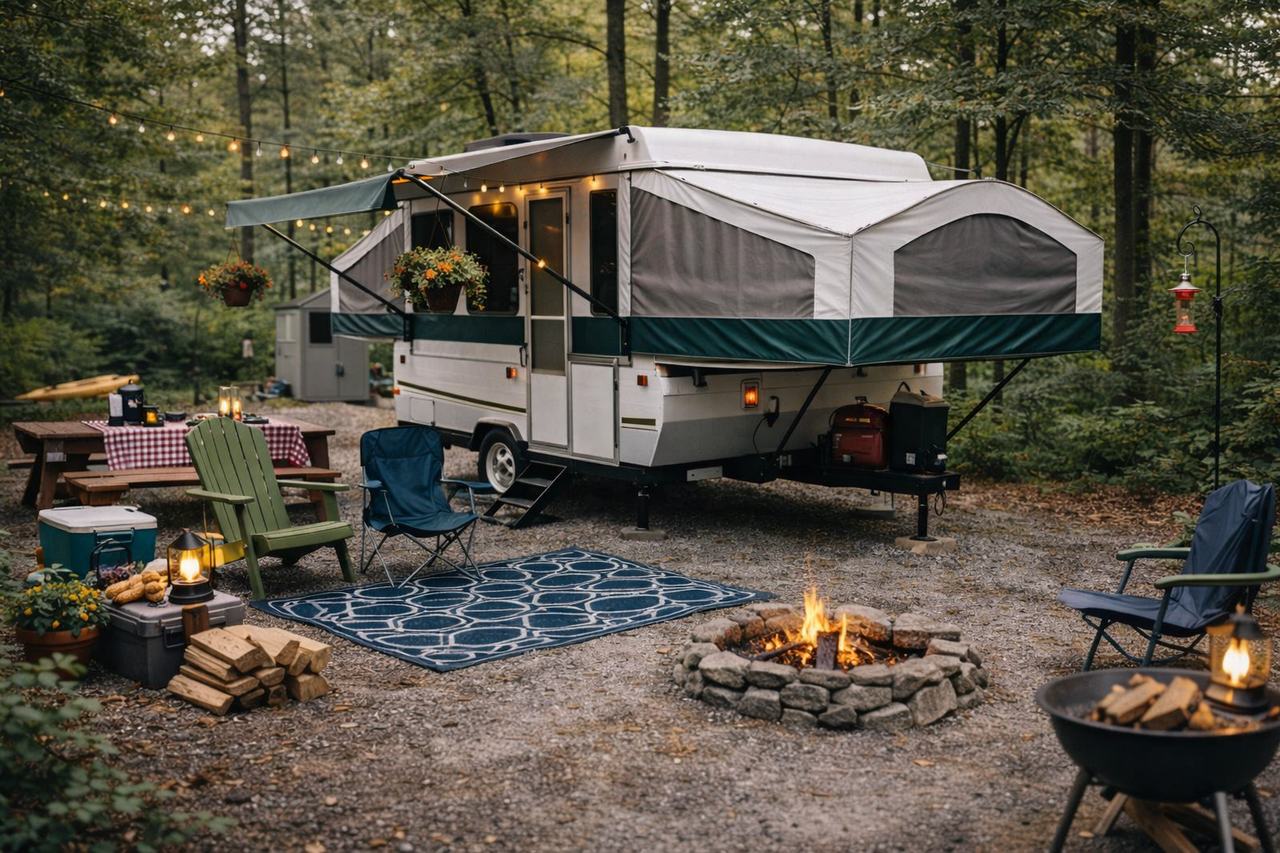
A pop up camper, sometimes called a folding camper or tent trailer, is a towable recreational vehicle designed to collapse for easier towing and storage, then expand once parked at a campsite. Pop up campers are popular because they are lighter than many travel trailers and often easier to tow with smaller vehicles.
Even though they are smaller and lighter, pop up campers still face a broad range of insurance risks. The canvas or soft sided sections can be exposed to weather. The frame and body can be damaged during towing. Interior belongings can be stolen or damaged. Campground use can also create liability exposure if someone is injured near your campsite.
- Lightweight towable design
- Fold down structure for easier storage
- Expandable sleeping and living areas
- Popular for weekend trips and seasonal camping
What pop up camper insurance may cover
Pop up camper insurance can be built around several core protections depending on the value of the camper, how often it is used, and how much risk the owner wants to retain personally. The right structure often depends on whether the camper is used occasionally, seasonally, or for longer trips.
- Physical damage coverage for the camper itself after covered accidents or losses.
- Theft and vandalism protection for the camper and certain attached equipment.
- Coverage for weather related damage such as hail, wind, or falling objects.
- Protection for belongings inside the camper through personal effects coverage.
- Liability coverage for certain campsite related incidents.
For owners comparing coverage structures, it helps to understand how the physical damage portion is divided between collision coverage and comprehensive coverage.
Pop up camper insurance vs auto insurance
One of the most common points of confusion is whether a tow vehicle policy fully covers a pop up camper. In many cases, the towing vehicle may extend some liability protection while the camper is attached, but that does not necessarily mean the camper itself is fully protected for physical damage, theft, storm losses, or campsite related exposures.
This is why many owners choose dedicated coverage for the camper. A separate camper or RV policy can help address the unit’s value more directly and can include optional protections that an auto policy may not provide.
For a broader comparison, see RV insurance vs auto insurance.
Collision risks while towing a pop up camper
Although pop up campers are smaller than many other RVs, they can still be damaged in towing accidents. Backing into a post, clipping an object while turning, or being struck by another vehicle can all lead to costly repairs. Frame damage, axle damage, body panel damage, and damage to folding systems can all add up quickly.
These types of losses are generally addressed through RV collision coverage. Collision coverage is often one of the most important protections for owners who tow regularly or take longer trips.
Common towing related risks
- Backing into poles or campsite barriers
- Damage while turning or maneuvering
- Accidents caused by other drivers
- Trailer damage from loss of control events
- Damage entering or leaving storage areas
Why collision coverage matters
- Repair costs can exceed expectations
- Even minor impacts can damage trailer systems
- Frequent travelers face higher road exposure
- Financed units may require physical damage coverage
- Out of pocket replacement can be costly
Weather, theft, and storage risks
Pop up campers are often stored outdoors for extended periods. That creates exposure to hail, wind, falling branches, vandalism, theft, rodent damage, and other non collision losses. Soft sided or folding components can be especially vulnerable if weather conditions are severe.
These types of losses are usually addressed through RV comprehensive coverage. For many seasonal owners, comprehensive coverage is just as important as collision coverage because the camper may spend more time parked or stored than on the road.
- Storm and hail damage
- Falling tree limbs or debris
- Theft of the camper or attached equipment
- Vandalism at storage lots or campsites
- Fire and certain non collision losses
If your pop up camper sits unused for part of the year, also review RV insurance for seasonal use and RV storage coverage.
Personal belongings inside a pop up camper
Even smaller campers often carry valuable personal property. Bedding, clothing, cooking gear, electronics, outdoor equipment, and camping accessories can add up quickly. If those belongings are stolen or damaged in a covered loss, the camper itself may be insured while the belongings inside require separate treatment.
That is where RV personal effects coverage can become useful. This coverage is especially relevant for owners who store gear inside the camper between trips or who travel with higher value equipment.
Campground liability exposure for pop up campers
Once the camper is parked and set up, liability concerns can shift from towing exposure to campsite exposure. Guests, neighbors, and other campers may walk through or around your site. Trip hazards, cooking equipment, campfires, pets, and outdoor furniture can all create potential liability risk.
A pop up camper policy may include or coordinate with protections similar to RV vacation liability insurance when the camper is used as temporary lodging.
- Guest injuries near the campsite
- Slip and fall accidents around equipment
- Damage to neighboring property
- Incidents involving campfires or outdoor cooking
Who should consider pop up camper insurance
Not every owner needs the same protection, but dedicated pop up camper insurance often makes the most sense when the unit has meaningful value, is financed, is used regularly, or would be financially difficult to repair or replace out of pocket.
- Owners of newer or higher value pop up campers
- People who tow frequently during camping season
- Owners who store the camper outdoors
- People carrying valuable personal gear inside the unit
- Owners who want liability protection beyond basic auto policy overlap
If you use smaller RVs or campers across different trip types, you may also want to compare this page with camper insurance and fifth wheel RV insurance.
How pop up camper insurance affects cost
Pop up camper insurance is often less expensive than insurance for large motorhomes or fifth wheels, but premium still depends on the value of the unit, how it is stored, how often it is used, and what coverages are selected.
- Value and age of the camper
- Frequency of travel and towing
- Storage method and location
- Deductible amount
- Coverage limits and endorsements
- Claims history and location factors
For broader pricing guidance, review how much RV insurance costs, Missouri RV insurance cost, and Kansas RV insurance cost.
Deductibles and settlement value for pop up campers
Deductible choices affect both premium and out of pocket exposure after a claim. Owners with stronger cash reserves may choose a higher deductible to reduce premium, while others may prefer a lower deductible to reduce claim time financial strain.
Settlement value also matters. Some policies may pay based on actual cash value, while others may offer stronger valuation options depending on the unit and carrier. Understanding both deductible structure and valuation method is important when comparing policies.
For more, review RV insurance deductibles explained, replacement cost vs actual cash value, and RV total loss replacement coverage.
Pop up camper insurance within the broader RV insurance cluster
Pop up camper insurance is part of the broader RV insurance landscape. Owners usually get the best results when they evaluate the camper not just as a trailer, but as a combination of physical asset, travel equipment, and temporary living space.
Related RV insurance pages
Request a pop up camper insurance quote
Pop up campers may be smaller and simpler than many other RVs, but they still face meaningful risk from towing accidents, weather events, theft, and campsite liability. The right policy helps protect both the camper and the way you actually use it.
We can help you compare pop up camper insurance options and structure coverage around your travel habits, storage situation, and budget.
Request your RV insurance quote
Coverage availability, limits, exclusions, deductibles, and eligibility vary by carrier and policy. This page provides general informational guidance and does not describe all terms or conditions of any specific insurance policy.
Frequently asked questions
What should I know about Pop Up Camper Insurance?
Pop Up Camper Insurance should be reviewed in the context of your actual risk, not only the lowest premium. Policy language, endorsements and carrier appetite can change the practical answer.
How can I avoid coverage gaps?
Share accurate property, vehicle, business or rental details with your agent, review exclusions and ask how deductibles and limits would apply in a realistic claim.
When should I request a review?
Request a review before renewals, after major purchases, after property changes, when adding rentals or vehicles, or any time your financial exposure changes.

Missouri and Kansas Insurance Agent
Work With Tracy Fitch
Missouri and Kansas clients can work with Tracy Fitch, a property and casualty licensed insurance agent with more than a decade of insurance experience. Tracy helps clients review coverage, compare options, request policy changes, and understand next steps for home, auto, landlord, umbrella, renters, boat, RV, and business insurance.
Office: 212 W Mill St, Liberty, MO 64068
Email tfitch@hensonagency.com or call 816-479-4189.