
Does RV Insurance Cover Roof Leaks
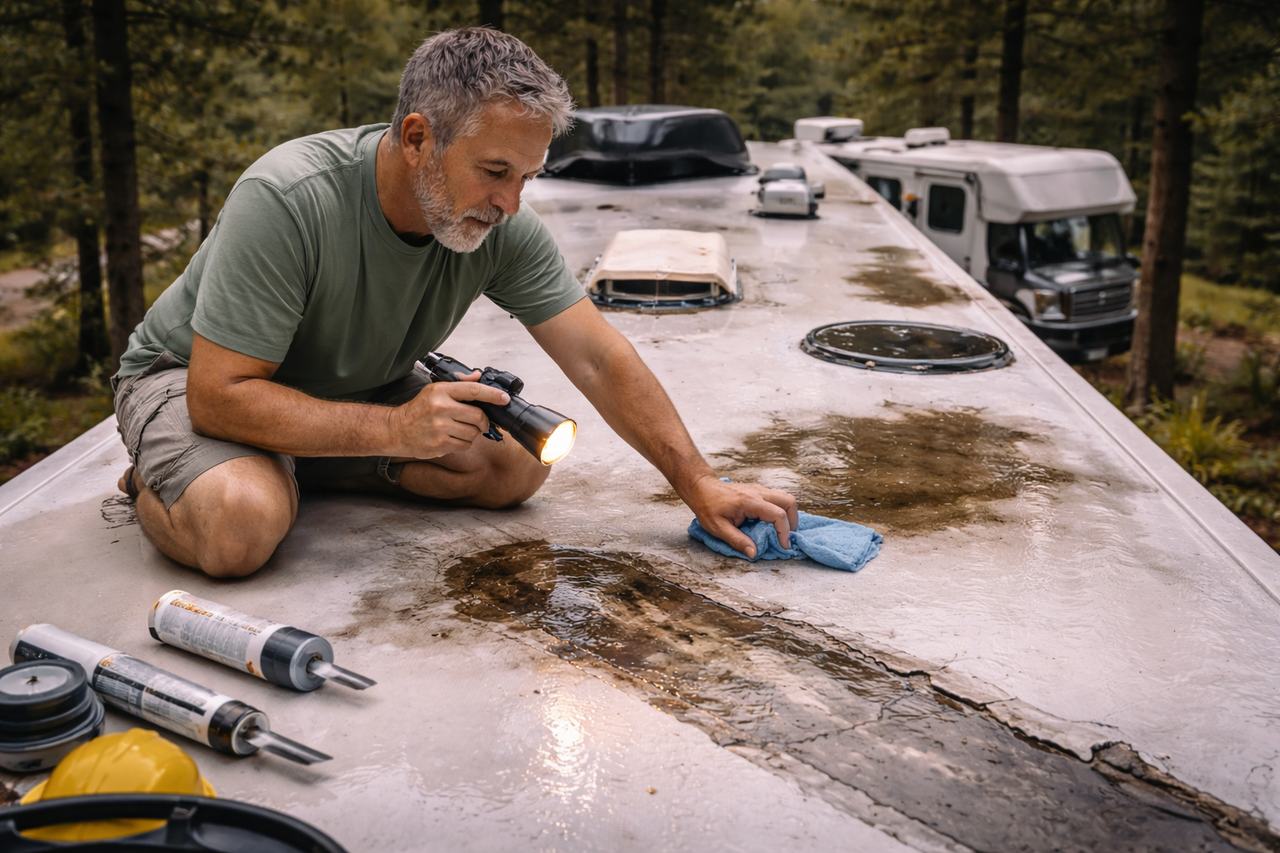
Roof leaks are one of the most common maintenance issues RV owners encounter. Because recreational vehicles are exposed to sun, rain, wind, and temperature changes, roof materials and seals can deteriorate over time.
Whether RV insurance covers roof leaks depends largely on what caused the leak. Insurance policies typically distinguish between sudden accidental damage and gradual deterioration caused by wear and maintenance issues.
Understanding how insurers evaluate roof leaks can help RV owners determine when a claim may be covered and when repairs may fall under normal maintenance responsibilities.
When RV insurance may cover roof leaks
Roof leaks may be covered if the leak results from a sudden and unexpected event that damages the roof structure. In many cases, these types of losses fall under RV comprehensive coverage.
Examples of covered events may include:
- Storm damage that punctures the roof
- Falling tree branches damaging roof panels
- Hail damage causing structural roof failure
- Debris impact while driving
If these types of events cause water intrusion, the resulting damage may be evaluated as part of the claim.
Roof leaks caused by gradual wear
Many RV roof leaks occur due to aging sealant, deteriorating roof membranes, or normal wear over time. These situations are usually considered maintenance related issues rather than sudden accidental damage.
Insurance policies generally do not cover damage caused by:
- Deteriorating roof sealant
- Cracked seams or gaskets
- Long term sun exposure
- Poor roof maintenance
Because roof seals must be inspected and maintained regularly, insurers often classify these issues as normal maintenance responsibilities.
Water damage resulting from roof leaks
If a roof leak leads to water intrusion inside the RV, the extent of coverage may depend on the cause of the leak and the timing of the damage.
For example:
- Water entering through sudden storm damage may be covered
- Water intrusion caused by neglected roof seals may not be covered
- Long term moisture damage may be excluded
For a broader explanation of water related claims, see does RV insurance cover water damage.
Roof leaks while the RV is in storage
Many RV owners store their vehicles for part of the year. Roof leaks discovered during storage may have developed slowly or may result from a sudden weather event.
Comprehensive coverage may apply if the damage was caused by storms, falling debris, or other sudden events during storage.
Owners who store their RV for extended periods may also want to review RV insurance for seasonal use.
Preventing roof leaks in RVs
Regular inspection and maintenance are essential for preventing roof leaks in recreational vehicles. Because RV roofs experience constant exposure to weather and travel vibration, periodic maintenance can help extend roof life.
Common preventive steps include:
- Inspecting roof seams and sealant regularly
- Resealing roof joints as recommended by the manufacturer
- Checking skylights and vent covers
- Protecting the RV during long term storage
Maintaining the roof can also help prevent situations where water intrusion may not be covered by insurance.
Types of RV insurance that relate to roof damage
Several components of an RV insurance policy may influence how roof related damage is evaluated.
Understanding these coverage types can help RV owners better evaluate the protection included in their policy.
Roof leaks within the RV insurance coverage structure
Roof leaks are often evaluated alongside other common RV insurance questions regarding coverage limitations and maintenance responsibilities.
Related RV insurance pages
Review your RV insurance coverage
Roof leaks can lead to expensive repairs if water intrusion damages the interior structure of an RV. Reviewing your insurance policy can help ensure the coverage structure aligns with your risk exposure and travel habits.
Our agency can help you evaluate RV insurance options and determine coverage levels that match your RV type and usage patterns.
Request your RV insurance quote
Coverage availability, limits, exclusions, deductibles, and eligibility vary by carrier and policy. This page provides general informational guidance and does not describe all terms or conditions of any specific insurance policy.
Direct answer
What should I know about does rv insurance cover roof leaks?
Does RV Insurance Cover Roof Leaks is about understanding where coverage, exclusions, deductibles, limits and carrier rules can affect a household, property owner or business. The right answer usually depends on the property, assets, use case, claims history, risk tolerance and how the policy is written.
Frequently asked questions
What should I know about Does RV Insurance Cover Roof Leaks?
Does RV Insurance Cover Roof Leaks should be reviewed in the context of your actual risk, not only the lowest premium. Policy language, endorsements and carrier appetite can change the practical answer.
How can I avoid coverage gaps?
Share accurate property, vehicle, business or rental details with your agent, review exclusions and ask how deductibles and limits would apply in a realistic claim.
When should I request a review?
Request a review before renewals, after major purchases, after property changes, when adding rentals or vehicles, or any time your financial exposure changes.

Missouri and Kansas Insurance Agent
Work With Tracy Fitch
Missouri and Kansas clients can work with Tracy Fitch, a property and casualty licensed insurance agent with more than a decade of insurance experience. Tracy helps clients review coverage, compare options, request policy changes, and understand next steps for home, auto, landlord, umbrella, renters, boat, RV, and business insurance.
Office: 212 W Mill St, Liberty, MO 64068
Email tfitch@hensonagency.com or call 816-479-4189.